
Your Pool During a Heatwave: Why Water Cools You Up to Twenty-Five Times Faster Than Air.
Summers in Poland — and across much of Europe — no longer look the way they did a decade ago. Heatwaves arrive earlier, last longer and increasingly bring so-called tropical nights, when the temperature never drops below twenty degrees Celsius. In conditions like these, a private pool stops being a luxury and becomes the simplest way to reclaim comfort in your own garden. But before you dive in, it is worth understanding what actually happens to a pool when the thermometer climbs past thirty degrees — and why a swim brings such instant relief.
The fact that explains why a pool feels so refreshing
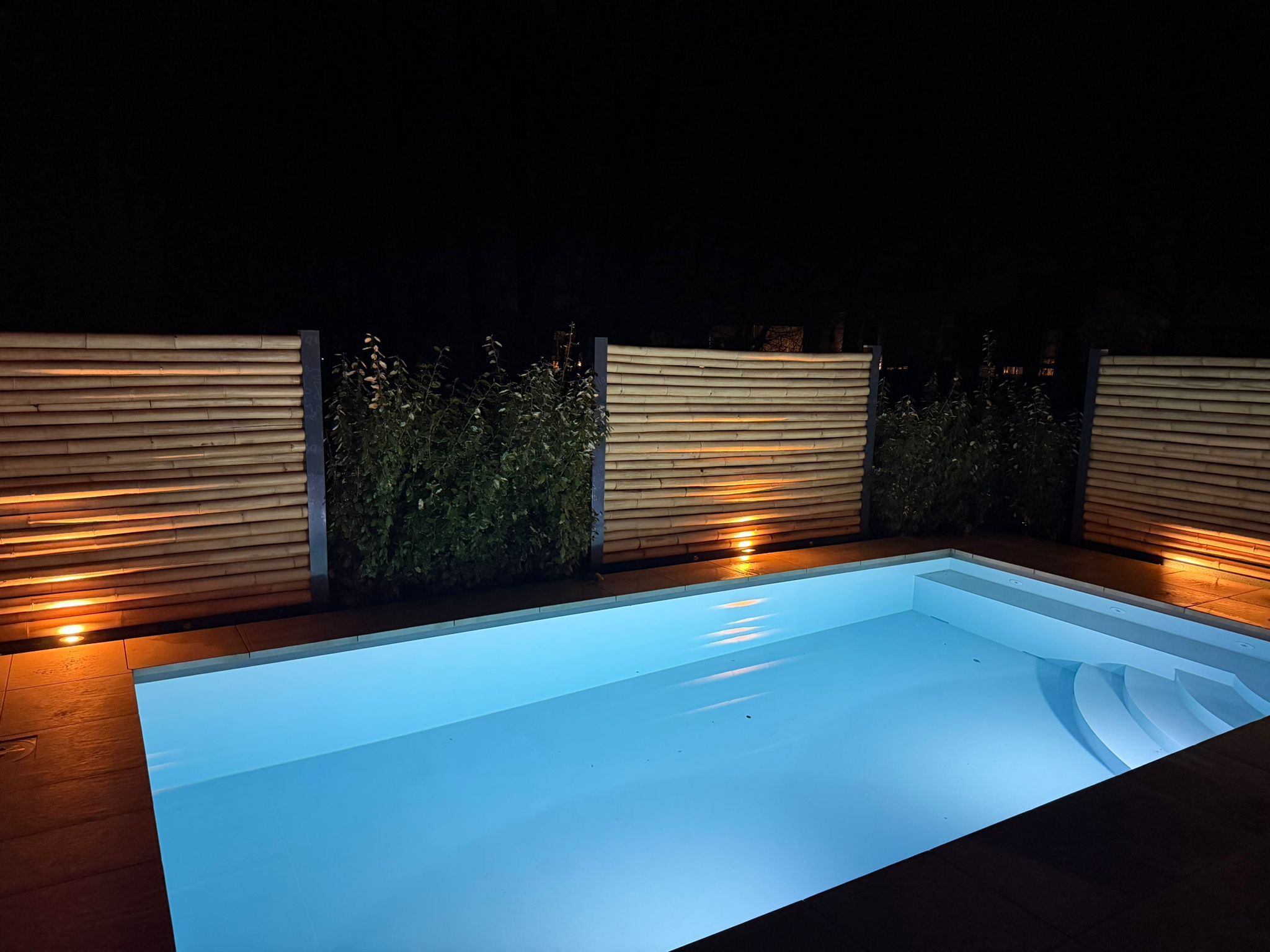
Water draws heat away from the human body roughly twenty-five times faster than air at the same temperature. This is not a psychological trick; it is pure physics. Water conducts heat far more efficiently than air, which is why even a swim in water at twenty-four degrees can feel genuinely cooling, despite that being the temperature of a pleasant summer day. Air at the same reading does nothing to cool us, yet water does, and almost instantly. The same principle explains why the body loses heat so quickly in a cool lake compared with standing in air of a similar temperature. On a scorching day, though, this works entirely in our favour: the body sheds excess heat into the water at a rate no fan could ever match.
What heat does to the water in your pool
High temperatures and strong sunshine set several processes in motion at once. The first is evaporation. At thirty-something degrees, with low humidity and a light breeze, a pool can lose several litres of water from every square metre of its surface each day. In a larger pool that means several hundred litres in twenty-four hours, and the drop in water level often becomes visible to the naked eye within two or three days. The second process is the rise in water temperature itself. The warmer the water, the faster algae and bacteria develop, which is why summer care demands more vigilance. The third, often underestimated, is the accelerated breakdown of chlorine. Ultraviolet radiation destroys free chlorine within hours, so during a heatwave your disinfectant is used up far more quickly than in spring or autumn.
Why polypropylene handles heat so well
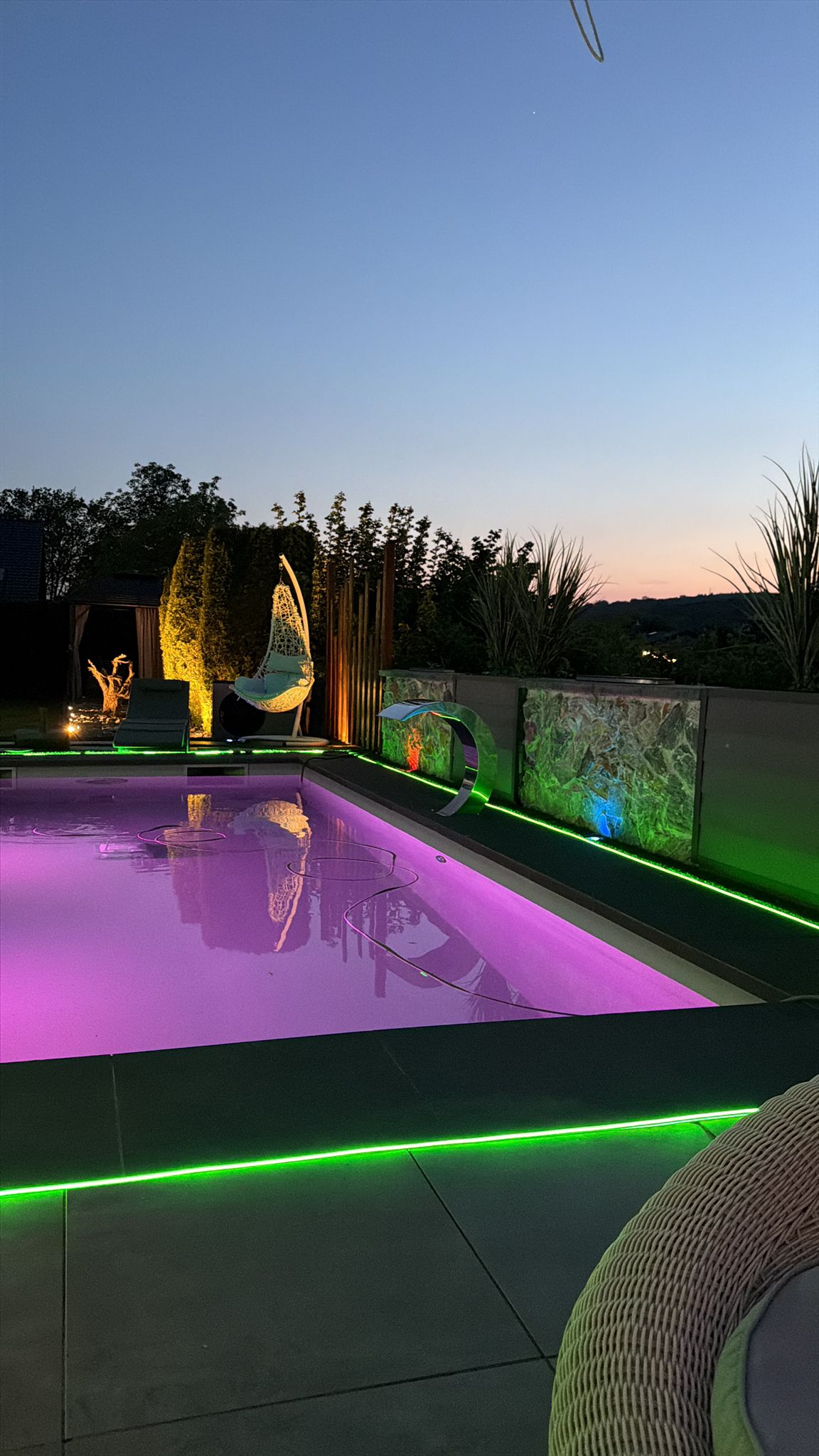
The material the shell is made of matters enormously here. Polypropylene remains fully stable across a range from minus thirty to plus ninety degrees Celsius, so summer heat makes no impression on it whatsoever. It does not warp, it does not fade in the sun, and it does not react with water or pool chemicals. Its smooth, non-porous surface gives algae little to cling to, a real advantage in a season of high temperatures. By comparison, some materials lose colour or grow brittle after years of exposure to sunlight and temperature swings. A polypropylene shell, on the other hand, stays exactly the same for decades, no matter how many heatwaves pass over the garden.
How to look after your pool during a heatwave
In practice, a handful of habits is enough to get through the hottest days without trouble. Top up the water level regularly, before it falls below the skimmer line, because running the pump dry risks serious damage. Check the pH and chlorine levels more often than usual, every other day is sensible, since heat and sun shift these values faster. It is worth extending filtration times, as warmer water needs more intensive circulation. Limit swimming during peak sun, between roughly noon and three in the afternoon, and choose the morning or evening instead, when the sun is less fierce. A pool enclosure also helps: it reduces evaporation, slows the heating of the water and keeps out debris carried in by the wind.
A pool that cools the whole garden
There is one more benefit that rarely gets mentioned. Water evaporating from the pool absorbs heat from its surroundings and gently lowers the air temperature nearby. This phenomenon is called evaporative cooling, and it works on the same principle as sweat on human skin. In practice, the zone around the pool on a hot day can feel noticeably more pleasant than the rest of the baking garden. On top of that, the water surface reflects some of the sun rays, and in the evening the pool slowly releases the heat it has stored, softening sharp drops in temperature. A private pool thus becomes not just a place to swim, but a natural regulator of the microclimate around the house.
Summary
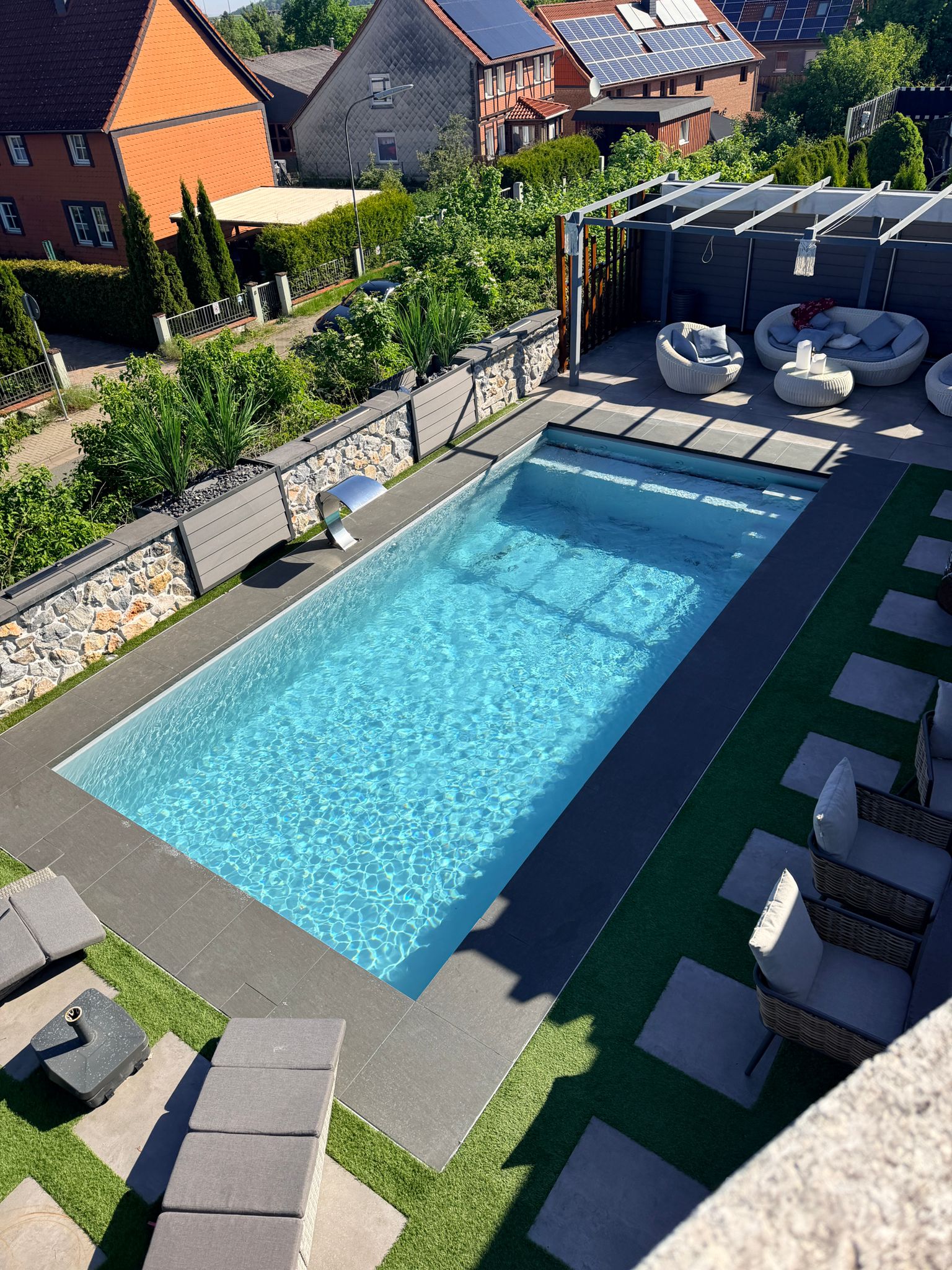
Heatwaves will return every summer, and a well-designed polypropylene pool handles them with ease. It combines a material that resists high temperatures, straightforward maintenance and that instant relief only water can provide. At PP-Pools we design shells tailored to the local climate and to the specific conditions of each garden. If you are thinking about building a pool before the next season, get in touch. We will show you solutions and completed projects that prove their worth for our clients even on the hottest days of the year.